



 UH Manoa Events
- Ke Aʻo Mau presents: Restoring Abundance Along Our Skyline
- Level Up Your Financial Literacy
- CCBAC Taste of Manoa Spring 2026
- Imi Hoola Program
- Resume and Personal Statement Workshop
- Archives 101: Preparing for Archives Research
- CCS Spring 2026 From Margins to Memory: A Microhistory of the Chinese Language
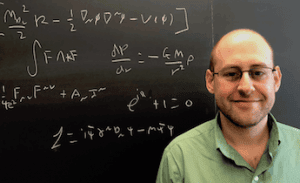
Assistant Professor Jeremy Sakstein’s study links dark matter to the galaxy’s silent core
Assistant Professor Jeremy Sakstein led the research, published February 3, by the American Physical Society. The research suggesting dark matter accumulates in stars near the galactic core, releasing energy that stops Cepheid variables from pulsing. This explains their absence and offers a new way to study dark matter with upcoming telescopes.
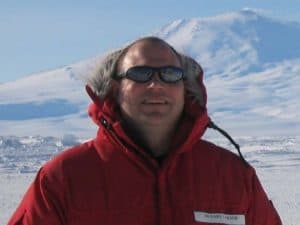
Honoring Dr. Gary Varner’s Legacy in Physics and Mentorship
Dr. Gary Varner was a pioneering experimental physicist and devoted mentor whose innovations advanced major projects like SuperKEKB/Belle II and ANITA, while shaping careers across the globe. His commitment to teaching and collaboration left a lasting impact at UH Mānoa, inspiring the creation of the Varner Graduate Award to support future physics graduate students. By contributing to the Varner Student Support Fund, donors help carry forward his legacy of discovery, mentorship, and excellence.

Professor Philip von Doetinchem and group completed rare antimatter study with CERN’s NA61/SHINE experiment.
Professor Philip von Doetinchem and group of University of Hawaiʻi at Mānoa’s Department of Physics and Astronomy recently completed a six-week campaign at CERN to study the creation of rare antimatter particles (antinuclei) using the NA61/SHINE experiment. This effort, supported by a 2024 NSF grant, helps compare these ground-produced particles with unusual cosmic signals recorded by orbiting instruments like the Alpha Magnetic Spectrometer. The ultimate goal is to narrow down the source of cosmic antimatter and reveal information about the structure and composition of the universe and our Galaxy.

Reigniting UH’s Free Electron Laser
A Free-Electron-Laser (FEL) is sparking back to life to re-illuminate its brilliance and redefine its potential in research of many scientific areas. This effort is lead by UH Mānoa Dept of Physics & Astronomy assistant professors Siqi Li and Niels Bidault. The FEL facility will be a research powerhouse, a training ground for accelerator research and a globally major player for accelerator science.

Associate Professor David Rubin contributed to the creation of the largest standardized collection of exploding stars
Associate Professor David Rubin contributed to the creation of the largest standardized collection of Type Ia supernovae—exploding stars used to measure cosmic distances. This groundbreaking dataset has revealed subtle hints that dark energy, the force driving the accelerating expansion of the universe, may not be constant over time.
This finding raises important questions about the current leading cosmological model, which is based on Einstein’s theory of general relativity.
“It’s exciting that our work from Hawaiʻi is part of a global effort to unlock the secrets of dark energy,” said Dr. Rubin.

Assistant Professor Jeremy Sakstein and Team of Scientists Propose Dark Dwarfs to Unlock Dark Matter Mysteries
Jeremy Sakstein, an assistant professor in the University of Hawaiʻi at Mānoa’s Department of Physics and Astronomy, led an international team of scientists in proposing a new type of star-like object called a “dark dwarf.” The discovery of these dark dwarfs could significantly advance our understanding of the elusive nature of dark matter and the fundamental composition of the universe.
The study by Dr. Sakstein and his collaborators was published in July 2025 in the Journal of Cosmology and Astroparticle Physics.