






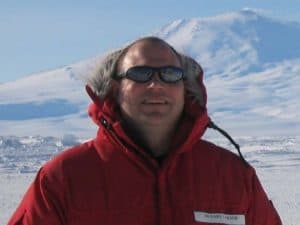
Gary Varner, Professor of Physics and Astronomy at the University of Hawaiʻi at Mānoa, passed away on July 14, 2023.
Professor Gary Varner joined the UH Mānoa faculty in 2005, however, his work with UH and the physics and astronomy department dates back to the early 1980s. Throughout his career, he made significant and critical contributions to numerous physics experiments worldwide.
“Gary was not only a brilliant scientist but also a caring individual, always extending support and kindness,” said friends and colleagues from the Physics and Astronomy Department. “We will forever cherish his important role in our endeavors.”

Prof. Susanne Still and collaboration team’s Physical Review Letter in press on “Information engine in a nonequilibrium bath”
UH Manoa Physics Professor Susanne Still and a collaboration team from Simon Fraser University received funding from a joint grant given by the Foundational Questions Institute (FQXI). In a letter of on August 3rd, 2023 of Physical Review Letters, the joint theory-and-experiment effort verifies that engines which are utilizing information to exploit non-equilibrium forces show significantly improved energy harvesting performance.
Phys. Rev. Lett. 131, 057101 (2023) – Information Engine in a Nonequilibrium Bath
PDF on arXiv
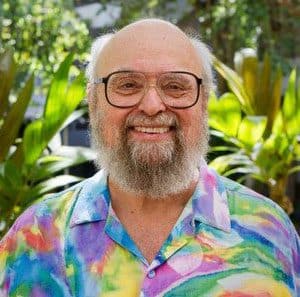
Professor John G. Learned awarded the 2023 Yodh Prize
Professor John G. Learned, a world authority in particle astrophysics, is the recipient of the 2023 Yodh Prize award. The Yodh Prize recognizes a scientist whose research career has had a major impact on the understanding of cosmic rays. The Prize also invites the awardee to UCI for a public presentation, seminar and further festivities in the late Fall of 2023. Professor Learned has authored more than 300 publications and has ore than 47,000 citations. He has been a pioneer in launching a new field of particle astrophysics. Professor Learned said, “There is great satisfaction in being recognized by one’s peers for having a long and successful career in investigating the mysteries of physics.”
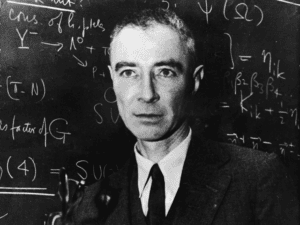
Retired UH physicist hopes ‘Oppenheimer’ reminds people of dangers of nuclear weapons
Retired University of Hawaiʻi physicist Michael Jones believes the film “Oppenheimer” will make people aware of the grave dangers of nuclear weapons on “The Converstation” with host Russell Subiono of Hawaii Public Radio. Dr. Jones hopes scientists will continue to do everything in their power to prevent the use of weapons of mass destruction.
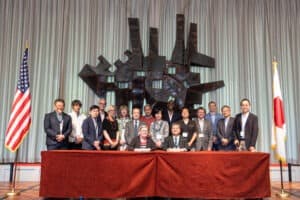
The 45th meeting of the US-Japan Science and Technology Cooperation Program in High Energy Physics
The University of Hawaiʻi at Mānoa’s Department of Physics and Astronomy and the Lawrence Berkeley National Laboratory hosted the 45th meeting of the US-Japan Science and Technology Cooperation Program in High Energy Physics in Hawai’i. More than 100 experts gathered at the East-West Center to network and stimulate connections with funding agencies and researchers in the U.S. and Japan.
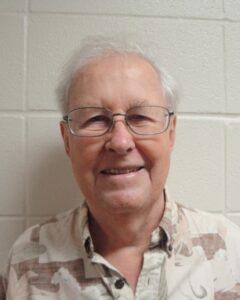
Emeritus Professor Robert (Bob) John Cence passed away peacefully at home on April 17, 2023.
Emeritus Professor Robert (Bob) John Cence, aged 92 of Honolulu passed away peacefully at home on April 17, 2023 after a brief illness. He was recruited in 1961 to help build the newly formed Physics PhD program at the University of Hawai’i at Mānoa. He was one of the first hires to this program after statehood. Bob is survived by his wife of almost 50 years, Helena, his son Alan and daughter Lynda, his additional children Ann Mulhauser, Mats Wallin, Lars Wallin, and Helena Wallin-Miller, and by his numerous grandchildren, great grandchildren, nieces, and nephews.
To honor Bob’s legacy, the family suggests donations to the Robert J. Cence Equity and Access Fund at the University of Hawaii Foundation to support first generation college students. Please direct check donations to Fund #130-2770-4 or give directly online at UH Foundation.